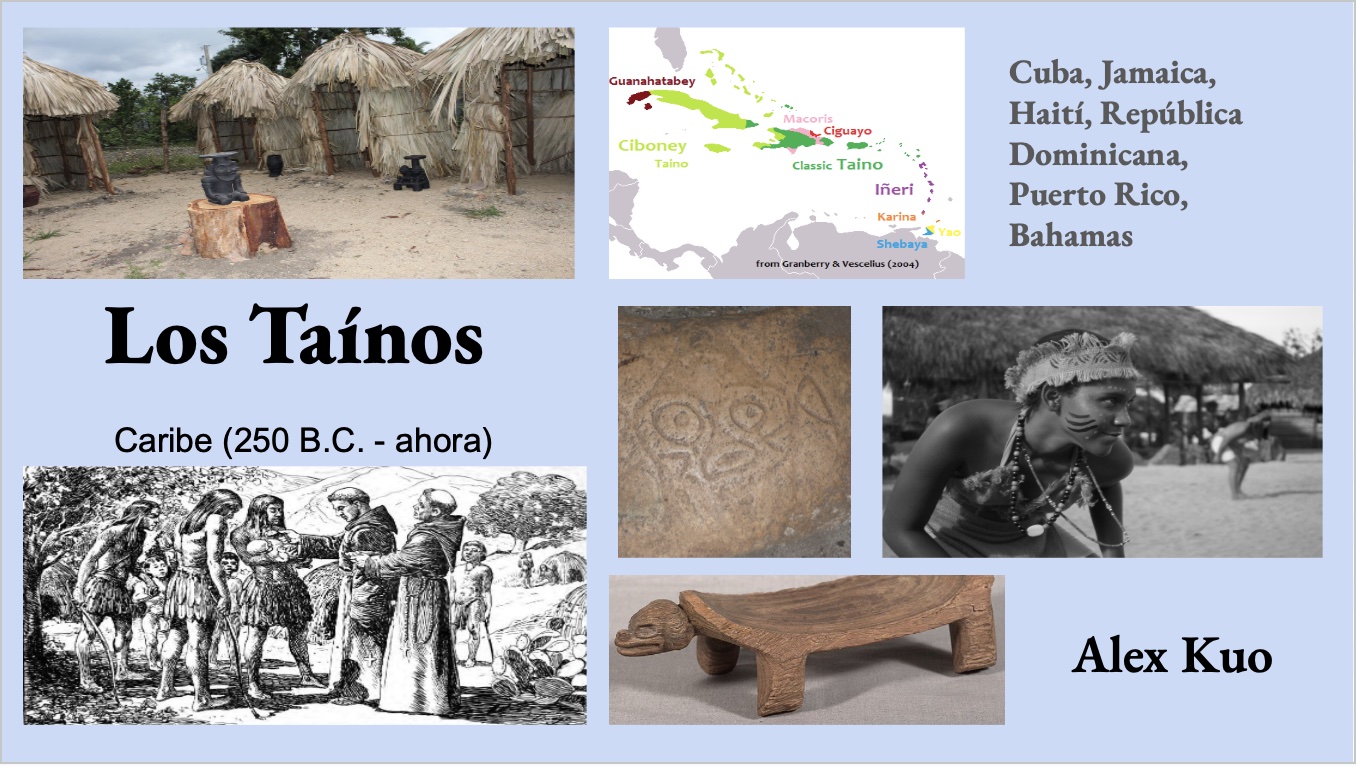
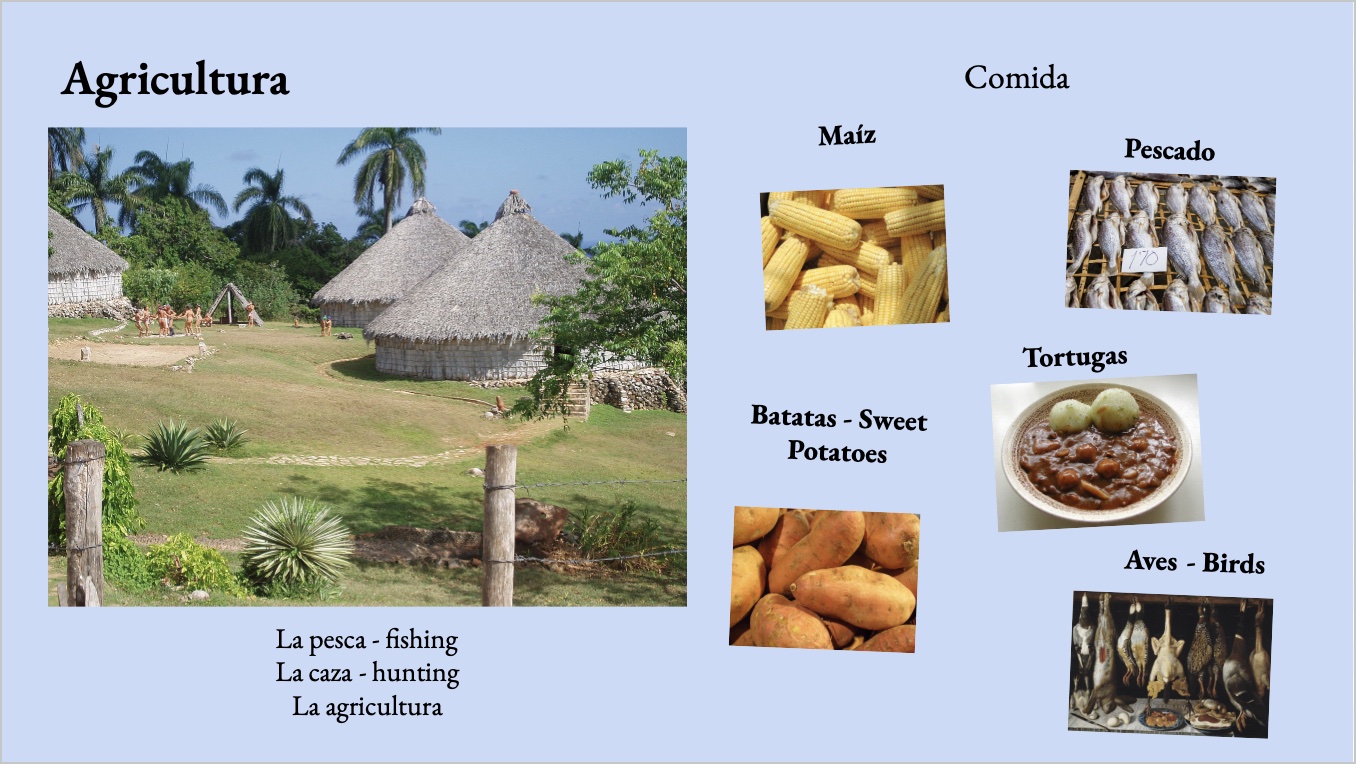
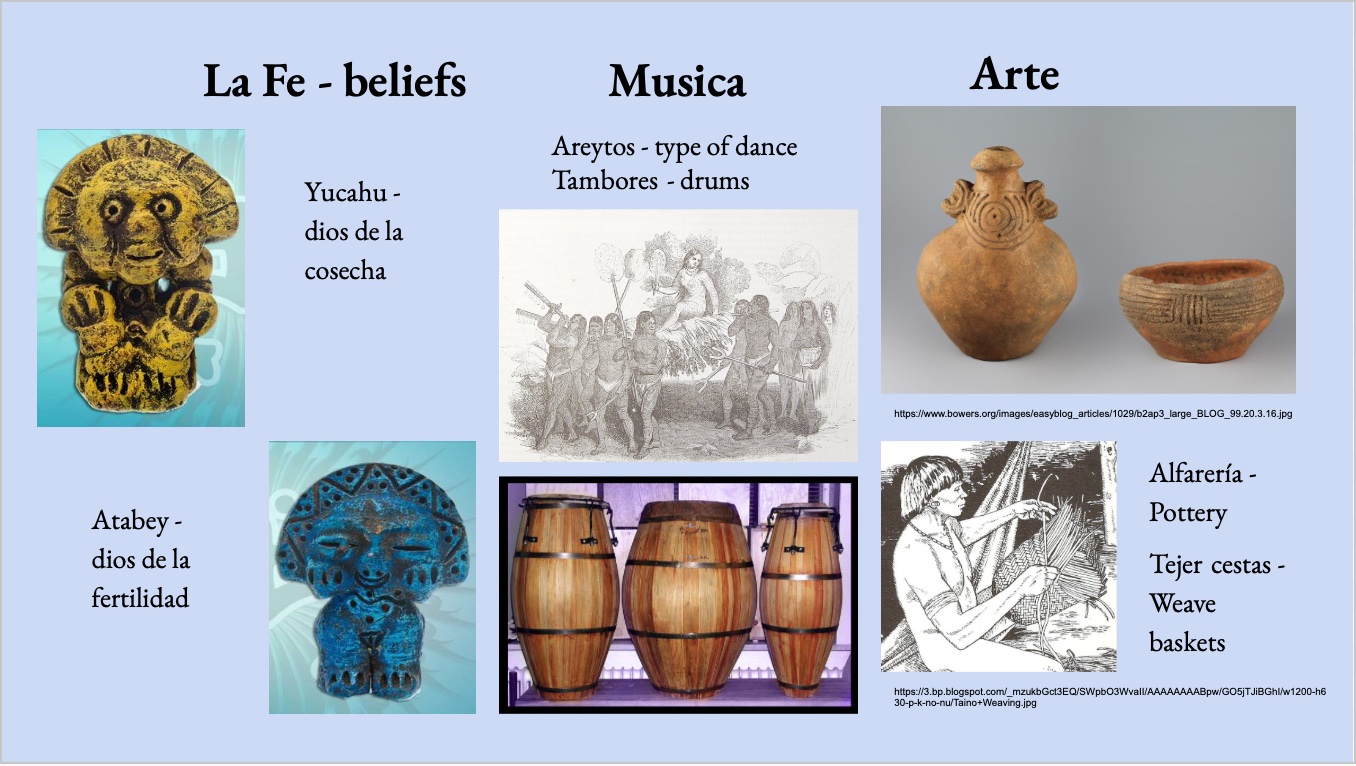
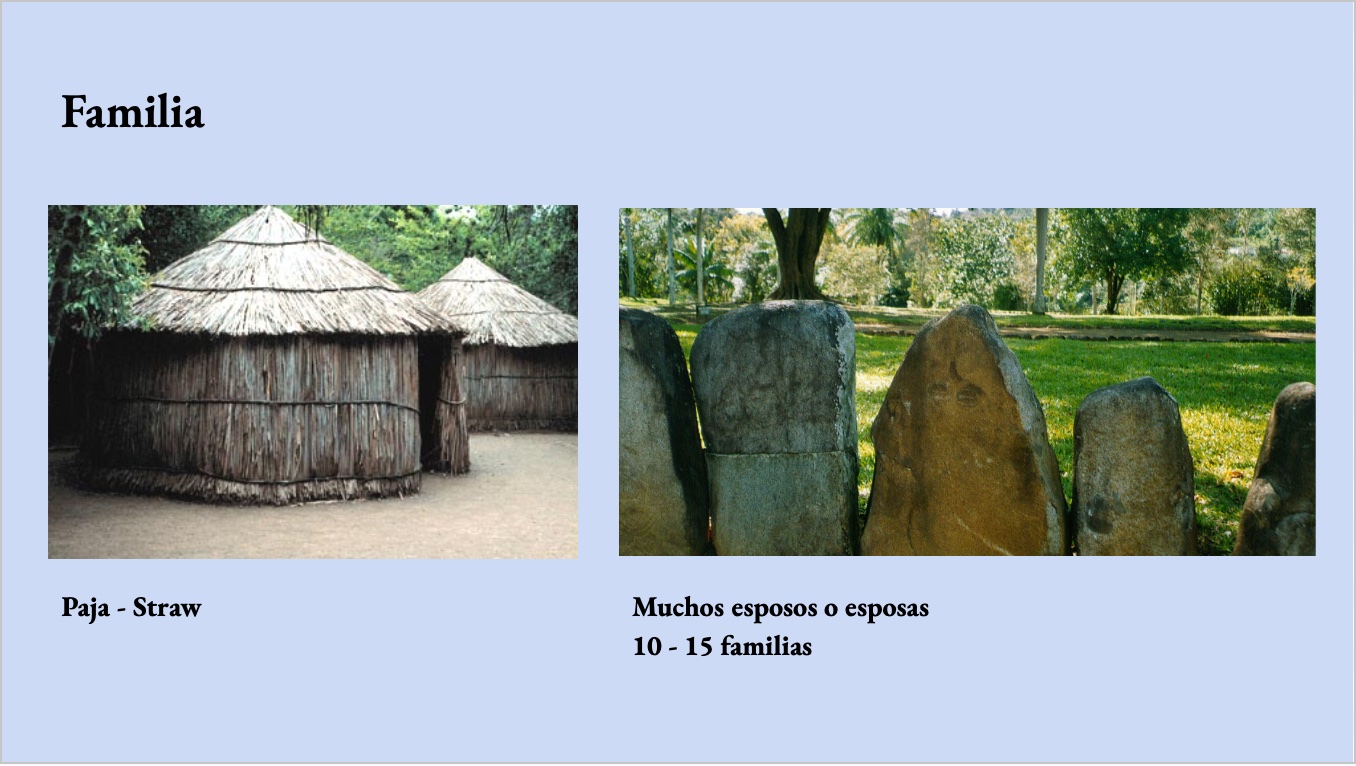
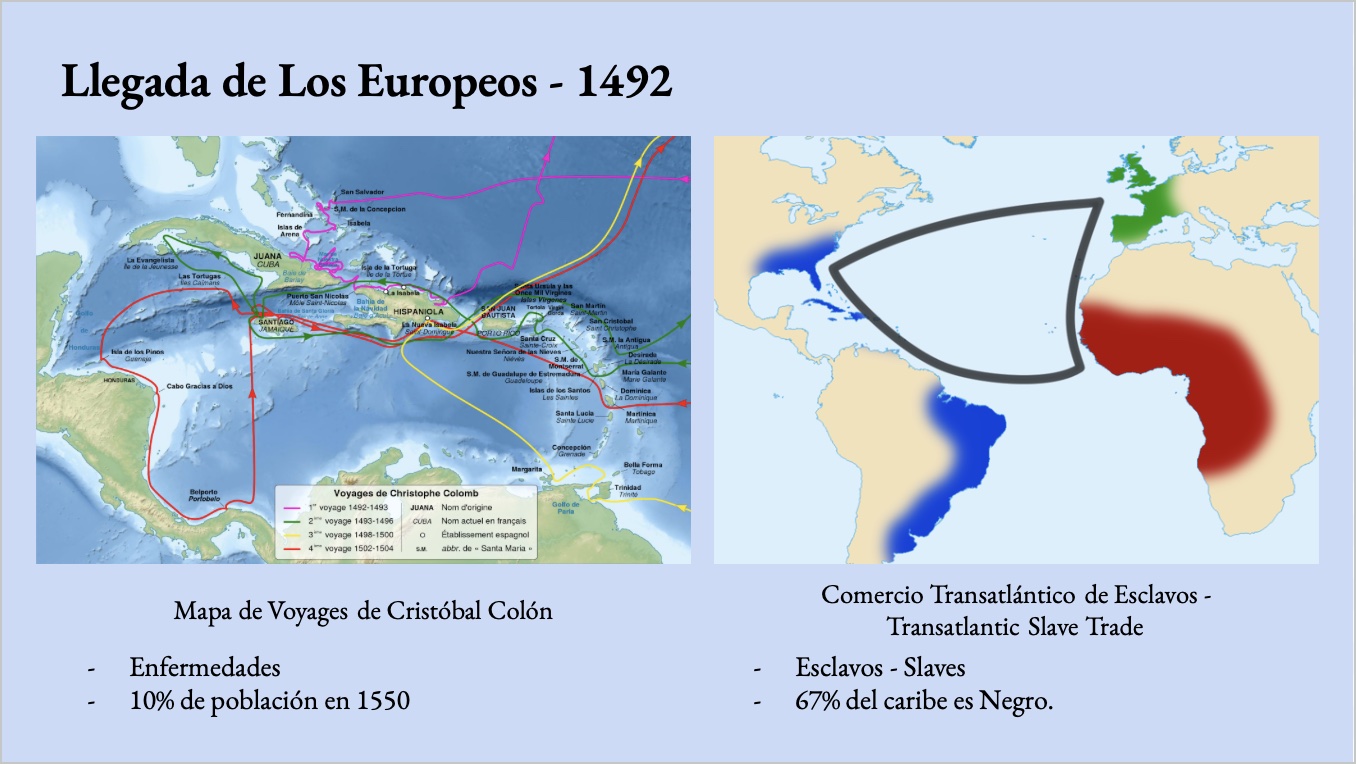
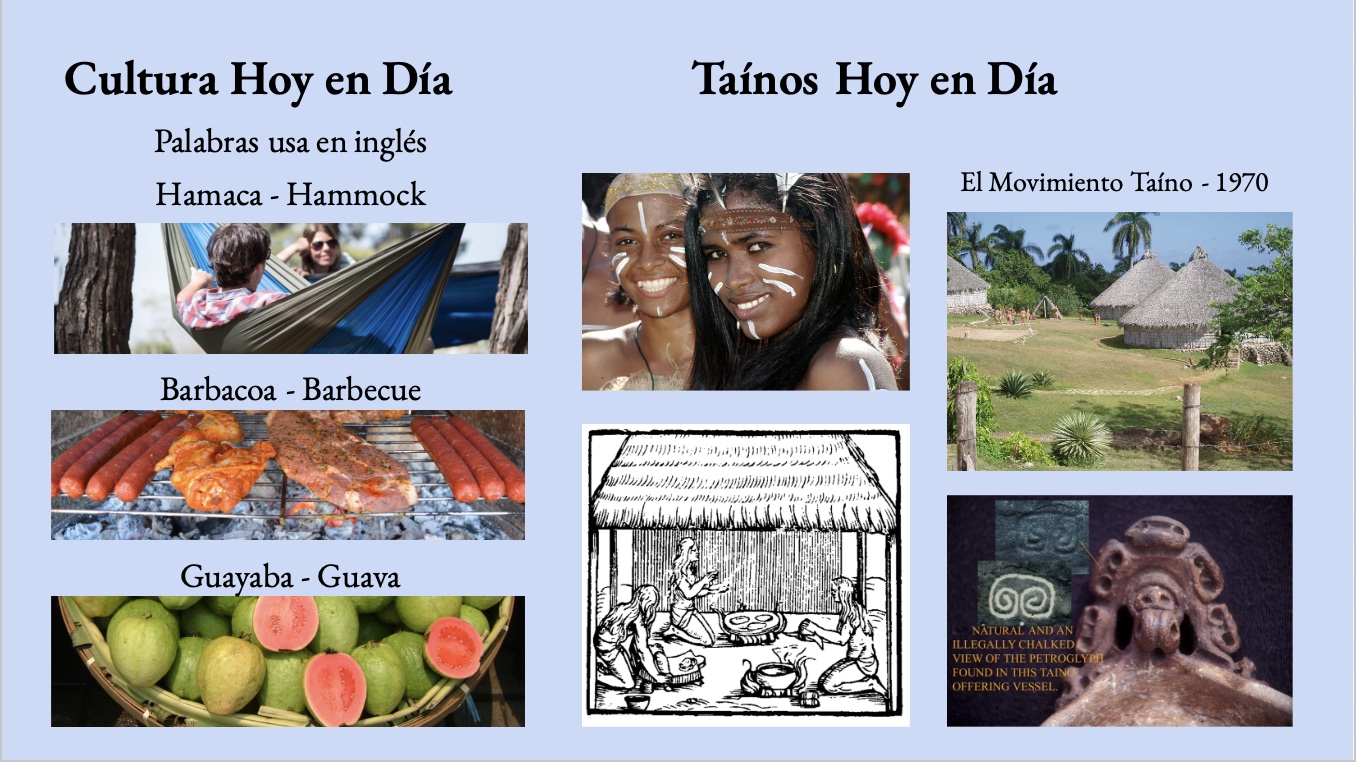
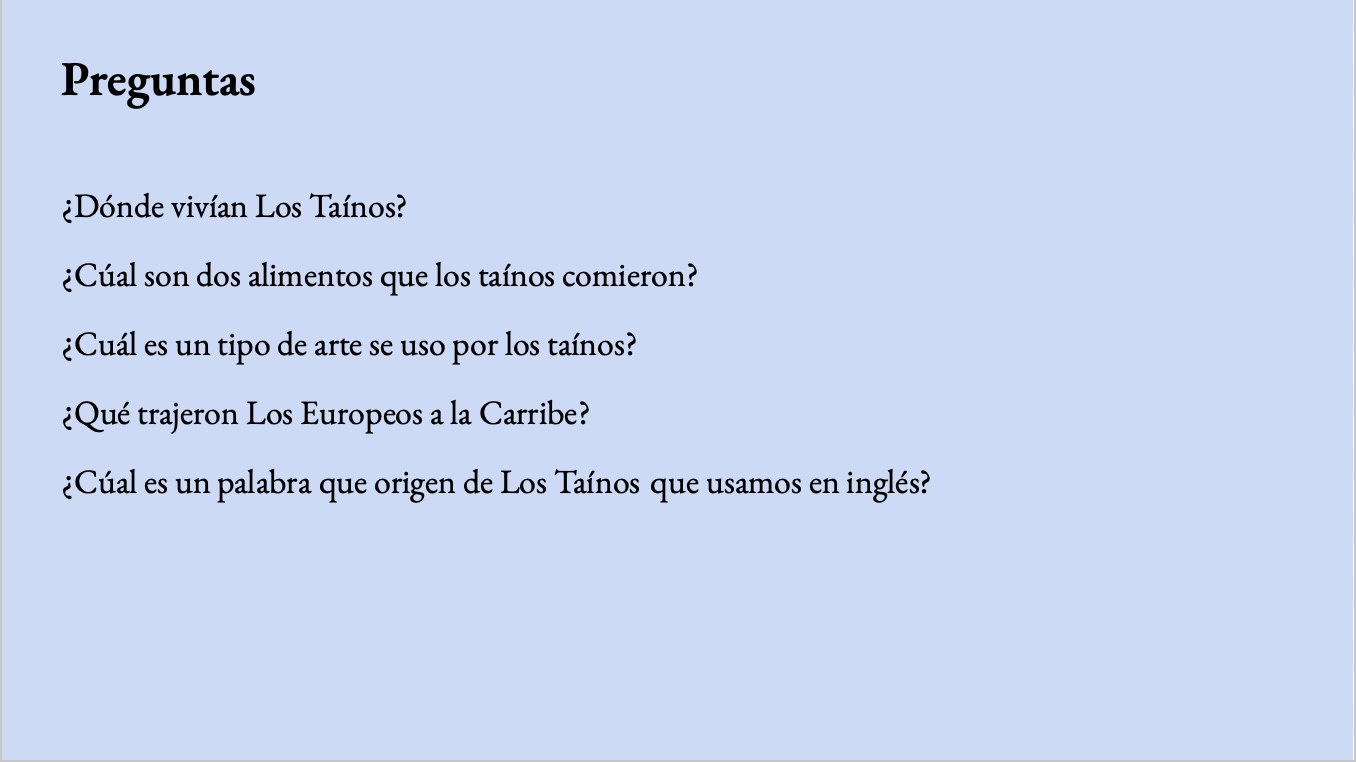
This is a presentation that I did on the Taíno people. They are an indigenous group of people who live in Cuba, Jamaica, Haiti, the Dominican Republic, Puerto Rico, and the Bahamas. When I did this presentation, I was in the first semester of my sophomore year, so right at the beginning of my Global Engagement journey. I did this presentation entirely in Spanish towards the beginning of the year, so a lot of my content was limited by my speaking ability. However, one thing that still stands out about this presentation is that it is still very removed from the actual people. A lot of the presentation is just basic generalising facts, as though they were a museum artefact. Although Taíno people still exist, this presentation focuses less on them in the present and more on their pre-Columbian habits.
Looking at this presentation, I feel very removed from the culture of the Taíno people and have a lot of questions. When I was in Spain, I visited the Museum of the Americas. The beginning part of the museum acknowledges the jumbled history and artefacts that we have of the indigenous people. A lot of artefacts that were brought back to Spain from the Americans were tossed together, not even separated by tribe, which makes indigenous people seem like one conglomerate instead of people with different cultures. The individual way of life and culture of the Taíno people certainly does not exist in the same way today. In my presentation, I talk about how, because of colonisation, people have lost a lot of tradition.
I put this presentation in the “democratic backsliding” category because, although I do not know what kind of representation the Taíno people had in their governmental system, the countries today that encompass where they used to be are largely backsliding democracies. This follows a lot of the theories that I learned in my Latin American Studies class, Erosion of Democracy, where many of the countries in this area today are facing cycles of weak democracy, slipping into autocracy. This is happening because the political, cultural, and social systems of the Taíno people were interrupted by colonialism.
Presentation: