This is a reflection I wrote for GEM305 about a picture of food from abroad. I knew immediately that I was going to pick this picture when I got the assignment. Chongqing, as a city, does not get too many travellers from outside of China, so I felt really out of place here. The food, as I mentioned in the writing, was almost inedible to me because of its spice, which only added to the feeling of being out of place, as though this city was not at all meant for me.
In addition to barely being able to consume food (and also water, which I detail in my description), I was not super familiar with the dialect in the city, which made my Mandarin almost useless for speaking and listening. Google is banned in China, so using a translator like Google Translate was not an option without a VPN, which drained my battery. Even using some sort of map app was extremely confusing because the city was built in a mountain and so there were many levels of roads you could travel on, making the city seem almost like a giant supermarket at times.
This photo here sums up the tip of my frustrations while traveling and the discomfort of being in a completely new environment. At this point in my time in China, I had traveled to a few cities and suburbs, eating food and animal parts I had never encountered before. As open as I am to trying new things and feeling out of my element, this trip to Chongqing tested the borders of what I was willing to explore and what was simply not physically possible for me to do.
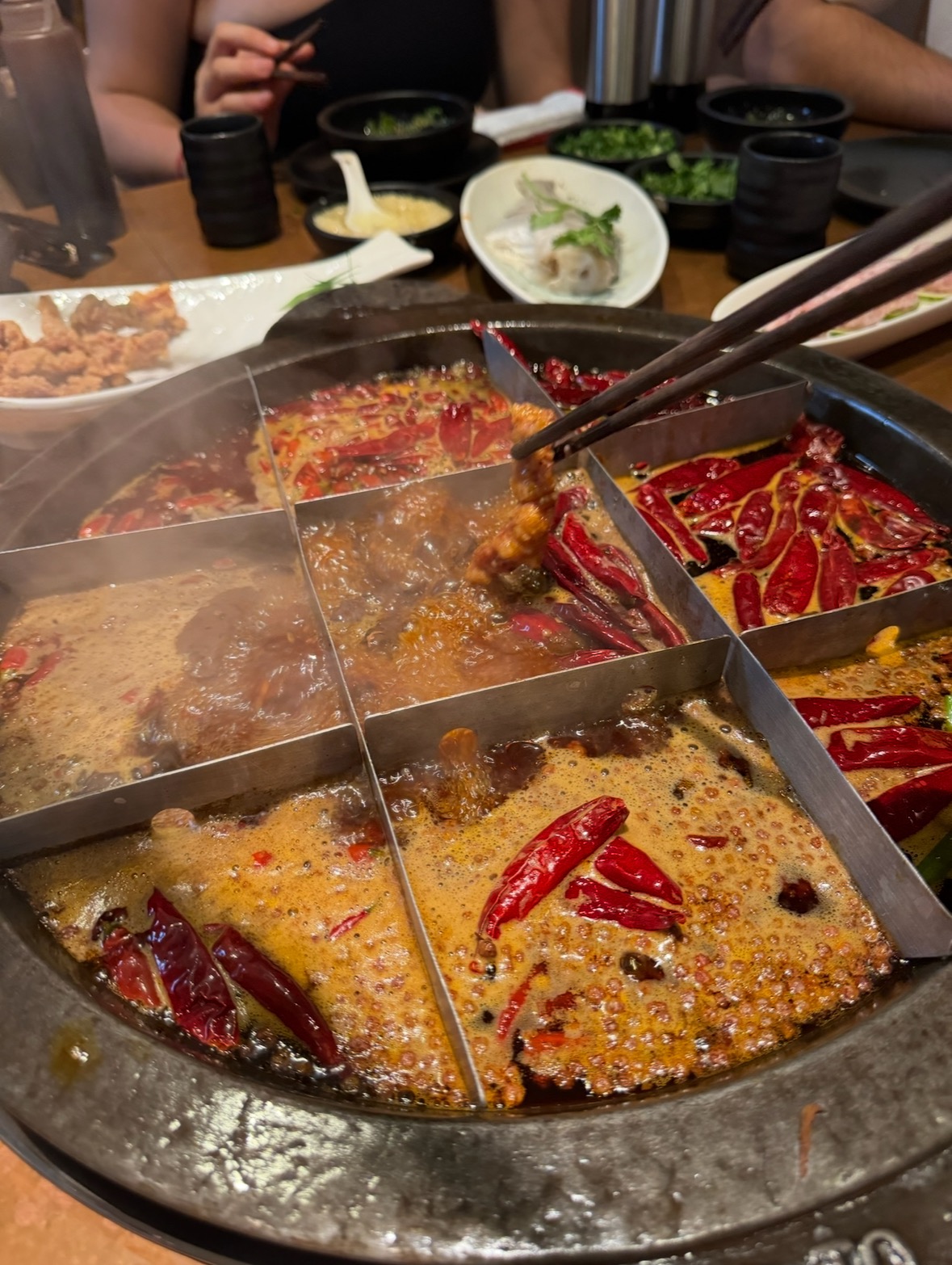
These are photos of some of the food that I ate in Chongqing during my stay in China. I was only there for three days which was honestly the only amount of time I would have been able to stay there because the food was incredibly spicy and it was very difficult to find something that my body was physically able to digest.
Hot pot is a very popular food. In the United States, I have noticed that going to a hot pot place there is usually one or two people with a pot and many pots built into the table. In China, there was often just one pot for everyone. The divisions in the pot are meant to separate meat products and different spice levels. Anyone can take from any section. This reflects a lot on the different cultures in the United States and China. In the United States, there is a more individualistic culture. Everyone will tend to their own food, or their own section of the pot. In China, the pots are for anyone to take and anyone to provide.
The hot pot shown here is the most mild option of spice available. I am someone with a pretty high spice tolerance and this was a little too spicy for me. Not only is the food spicy, but it is also served very hot. The reason for all of this is because the spice and heat kill any bacteria that could be formed. Historically, it was difficult to find clean water, so serving it hot and with spice ensured that the quality was good. All liquids to wash down the spice are also hot. It could be frustrating sometimes to walk around in the intense heat and humidity of China, wanting a cold glass of water, and then being given hot tea as the only option to drink.
Most of my stay in China I was in places that were more international, like Shanghai and Beijing, so these cities offered food palatable to those not used to the heat and spice. In Chongqing, there were very few international people walking around and very little diversity amongst the people. As someone who is half-white and traveling with an international group, I stood out considerably, so many people asked to take photos of us. The people in our group who were Chinese that traveled to Chongqing from Shanghai with us also stood out because they are from a different part of China, so even their features stood out slightly in the homogenous society.
