This is a presentation that I did after my trip to China for my government class, State and Society. I took this class in the spring of my junior year. For this assignment, I had to use one of the themes from class as a case study for a country. In our class discussions on James Scott and Michael Foucault, specifically with their ideas around legibility and discipline, respectively, I was reminded of my trip to China.
James Scott wrote the book, Cities, People, and Language, where he talks about how people are made “legible”. The idea is that states strive to make people easily monitored and standardised in order to better centralise their state power. Michael Foucault wrote the book, Discipline and Punish, where he discusses how when people know or believe that they are being surveilled, they self-discipline and conform to society.
When we were learning about these ideas in class, I could not help but recall my time in China. In China, there was a mass surveillance system that had the technology to identify people through cameras. Additionally, I had to carry my passport and scan it wherever I went. I remember one time I wanted to go swimming at a pool. I had to scan my passport before entering the campus, once I was in the building, and also once I arrived at the pool. In Beijing, there were passport checks that you had to go through in order to walk on the sidewalks.
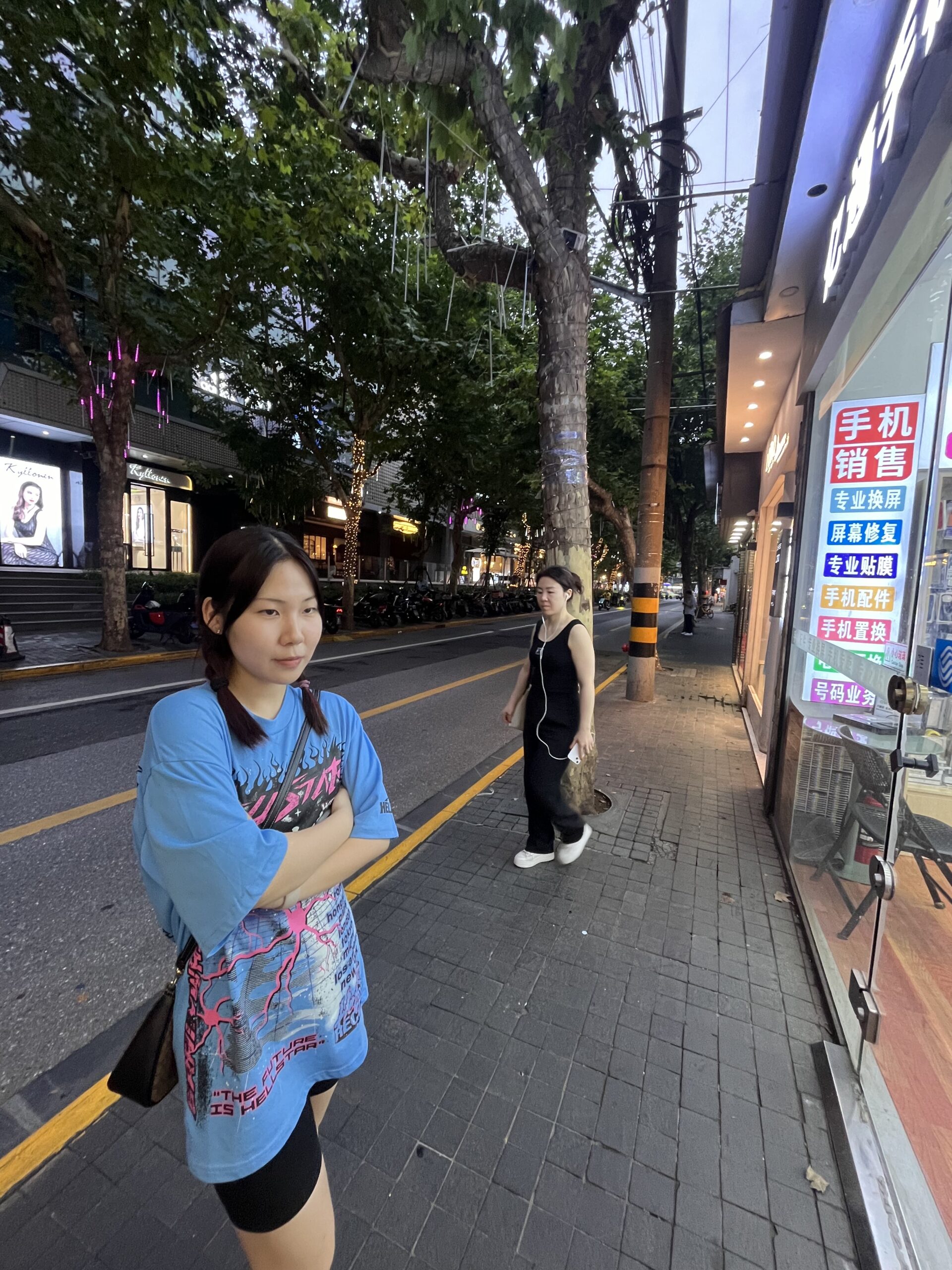
Throughout my time in China, I was being surveilled constantly with passport checks and cameras. Below, I have included in this post a random photo of my friend and me on the streets of China, where you can see that there are casually cameras placed around and in the trees. From talking to people who lived in China, the explanation that I was given was that the centralised government wanted to be able to monitor and see every single person and be able to pick them out if they act out of line to prevent anything such as an uprising from happening. While this seemed scary to me at first, I came to have a relationship where I both resented the surveillance because I had to monitor myself and conform to society, but I also felt a little appreciative of them at times because I felt super safe walking around Shanghai and other cities.
The biggest struggle that I had was not being able to criticise the government because of the cameras listening in on me. When I am in the United States, a lot of the conversations I have with my friends criticise our government, poking fun of various historical events and current policies in the United States. In China, I could not maintain this same sense of humour in public. I even found quickly that I had to introduce myself as being half Chinese instead of half Taiwanese because people would correct me quickly, and there was not really anything that I could do to insist that they are different.
This presentation was a great way to understand the intent of the constant surveillance that I felt and the historical significance of cameras and passport checks in China today.
Presentation: