This is a policy proposal I wrote for my Environmental Studies class, Polycrisis: Investigating Our World Crisis of Ecology, Economics, Empire. I took this class in the fall of my senior year. In the class, we looked at how the environment, financial, and geopolitical crises in our world intersect, paying close attention to the dynamics between the global north and the global south.
While the course looked at the interconnectedness of the world as a whole, I chose to focus this final policy proposal on Indonesia specifically, because I had planned to spend the majority of my winter break in Indonesia. From taking the class, I knew that my experience in Indonesia as an American would put me in a position where my privilege in the global world, in some ways, had come at the expense of the people in the global south, such as the people in Indonesia.
When I told my friends and teammates that I was going to Indonesia, many people were warning me about the water quality there. Upon further research, I learned that the clean water crisis in Indonesia had worsened because the United States had pulled USAID only a few months prior. This change by the policymakers in my country had little effect on me, but a huge effect on the people on the other side of the world. This issue is what I chose to centre my final paper on.
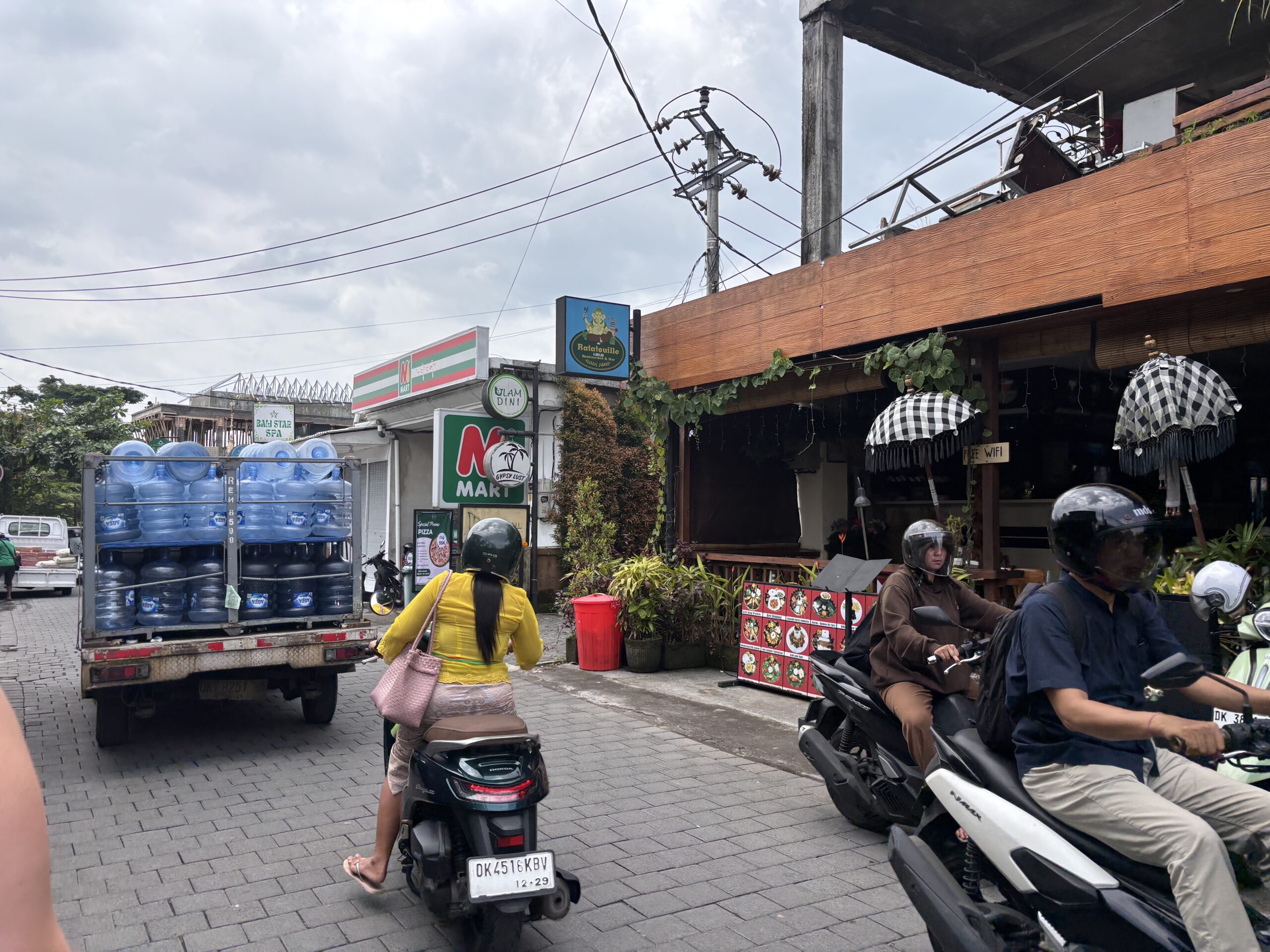
When writing this paper, I focused on individual households and how they received water. The statistics of extremely low access to adequate drinking water, 15%, and how the umbrella term of adequate, even for those 15%, could be harmful, were shocking and almost difficult to believe. However, once I arrived in Indonesia, I understood very quickly that the water crisis was as bad as the statistics showed. For the entire trip, I drank entirely from bottled water. The water that came from the tap was completely unusable as it smelled like rotten eggs. Every day, there would be trucks shipping many bottles of water that could be seen on the streets, and people washing themselves in the streams, which I have included a picture of below.
Observing this and knowing that the United States, in some ways, has played a part in the state of the water crisis gave me a lot of perspective on my position and privilege as an American traveling around the country.
Policy Proposal: Improving Safe Drinking Water in Jakarta
PROPOSAL FOR: The Indonesian Government
CREATED BY: Alexandria Kuo, Student at Wesleyan University
DATE: Tuesday, December 16, 2025
- Problem statement
Jakarta, a city with over 10 million people, is in a clean water crisis. This crisis has been caused by extreme weather, pollution, and decades of underinvestment in water infrastructure. Already, only 15% of households have access to adequate drinking water and the country could face a clean water shortage by 2040 (Permanasari and Teoman 2024).
Jakarta’s rivers have historically been the city’s main source of drinking water. However, the quality of water in the rivers is no longer safe due to pollution. Groundwater extraction has also become unsafe because of saltwater intrusion. Climate change has led to rising sea levels and worsened flooding. This has all worked to push saltwater into groundwater (Lazaro and Lancaster 2025). Only about two-thirds of households are connected to the piped-water distribution system that was put in place in 1997. The rest rely on contaminated sources of water (Permanasari and Teoman 2024). To add on to the problem, the decades of groundwater extraction have caused Jakarta to sink (Lazaro and Lancaster 2025).
Recently, the Trump administration eliminated USAID, whose funding worked to help with this problem. USAID’s mission director in Indonesia has warned that many communities are not going to be able to access clean drinking water and predicts that there will be an increase in waterborne diseases and preventable childhood illness. Low-income families are going to be hit the hardest. The Indonesian government is already struggling with rapid urbanisation and climate pressures. Now, they face the challenge of having to expand water access without USAID (Lazaro and Lancaster 2025).
Allthewhile, Jakarta’s infrastructure is ageing and there is a lack of investment which means that treated water does not meet safety standards by the time it reaches people’s homes. There are efforts to improve Jakarta’s water system but without investment, millions of people will continue to consume unsafe drinking water, and this problem is only going to worsen as climate change makes water scarcity worse.
This policy proposal is important because millions of people rely on the unsafe groundwater around Jakarta. Greater Jakarta is home to around 30 million people, which makes it crucial to come up with a solution. The recent loss of USAID is a pressing issue as water insecurity, health risks, and climate change will only accelerate without its presence.
- Policy History
USAID, or the United States Agency for International Development, has been one of Indonesia’s most significant development partners for water, sanitation, and hygiene (WASH) since its start in 2011. Over the past decade, USAID initiatives have expanded access to safe drinking water and helped local utilities prevail against climate change (U.S. Embassy & Consulates in Indonesia 2023).
The most recent programmes of USAID in Indonesia, IUWASH Tangguh and IUWASH Pasar, show the development of the programme’s efforts in the country. Both programmes operated under USAID’s Global Water Strategy Indonesia High Priority Country Plan, which has committed over $50 million in 2023 to provide climate-resilient water and sanitation services and have put in efforts to mobilise an additional $300 million in investment. IUWASH Tangguh is a $44 million initiative that is aimed to improve drinking water and sanitation services for 1.5 million people. IUWASH Pasar is a 10 million dollar five-year programme that works to expand access for low-income communities (U.S. Embassy & Consulates in Indonesia 2023 and bne IntelliNews 2025).
These multimillion dollar investments were crucial to Indonesia’s water problem. In Jakarta only 15% of households have access to adequate drinking water, and one-third still rely on unsafe sources (Permanasari and Teoman 2024). USAID programmes and funding directly worked to expand piped-water coverage, combating the growing problem of saltwater intrusion and groundwater extraction (Lazaro and Lancaster 2025).
This progress is now at risk. In early 2025, the Department of Government Efficiency announced the end of USAID operations and most staff and WASH programming were suspended (bne IntelliNews 2025). IUWASH Pasar and IUWASH Tangguh have been initiatives fully dependant on USAID funding and oversight. Without them, Jakarta will not be able to see through their initiatives and goals.
With the backdrop of growing water scarcity and climate pressures as well as the loss of USAID, the Indonesian government needs to come up with a way to address a problem that impacts over 30 million of its people. The Indonesian government needs to assume and adapt the role that USAID previously performed. Without continued investment and support from any actor, progress toward accessible, safe drinking water will stall and deter.
This paper will evaluate the effects of USAID’s IUWASH programmes and assess how Indonesia could design a domestic solution to IUWASH that can continue the work started by the United States.
- Policy Analysis
The effectiveness of IUWASH programmes can be assessed by looking at their impact on household access to improved water sources, the types of water supplies communities rely on, the quality of drinking water at various stages, and the risks that threaten the stability of Jakarta’s water system. Table 1 and Figures 1, 2, and 3 give empirical evidence supporting that IUWASH interventions were successful in improving water security in targeted communities and that their end will have negative consequences for the people it helped.
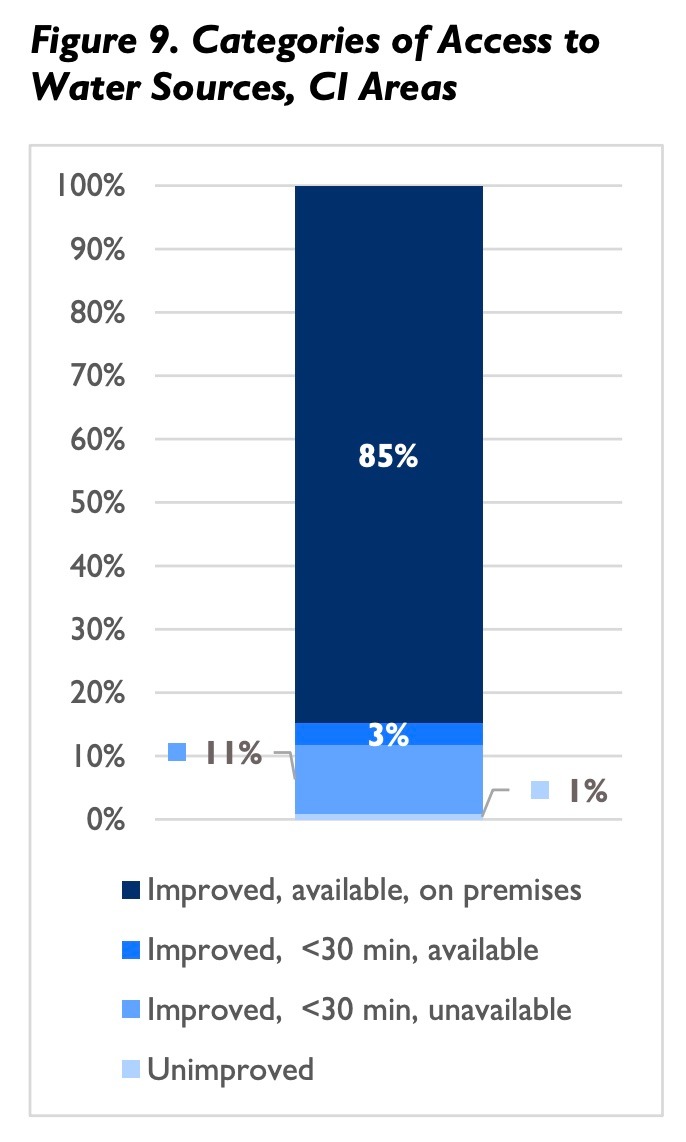
Figure 1: Categories of Access to Water Sources, CI Areas
(USAID Urban WASH Project 2023, 19)
Figure 1 shows access to water sources in Community Intervention (CI) areas. 85% of households benefiting from IUWASH programmes had access to improved, on-premises water sources. This rate is significantly above the average in Jakarta, where only about 15% of households have adequate access to drinking water (Permanasari and Teoman 2024). The high rate of improved access in treated areas compared to untreated areas reflects how effective IUWASH’s approach has been.
Without ongoing investment or technical support, these improvements risk deterioration as the existing systems are not maintained and importantly, the opportunity for these gains to be expanded go away. People may need to turn to unsafe alternatives to water.
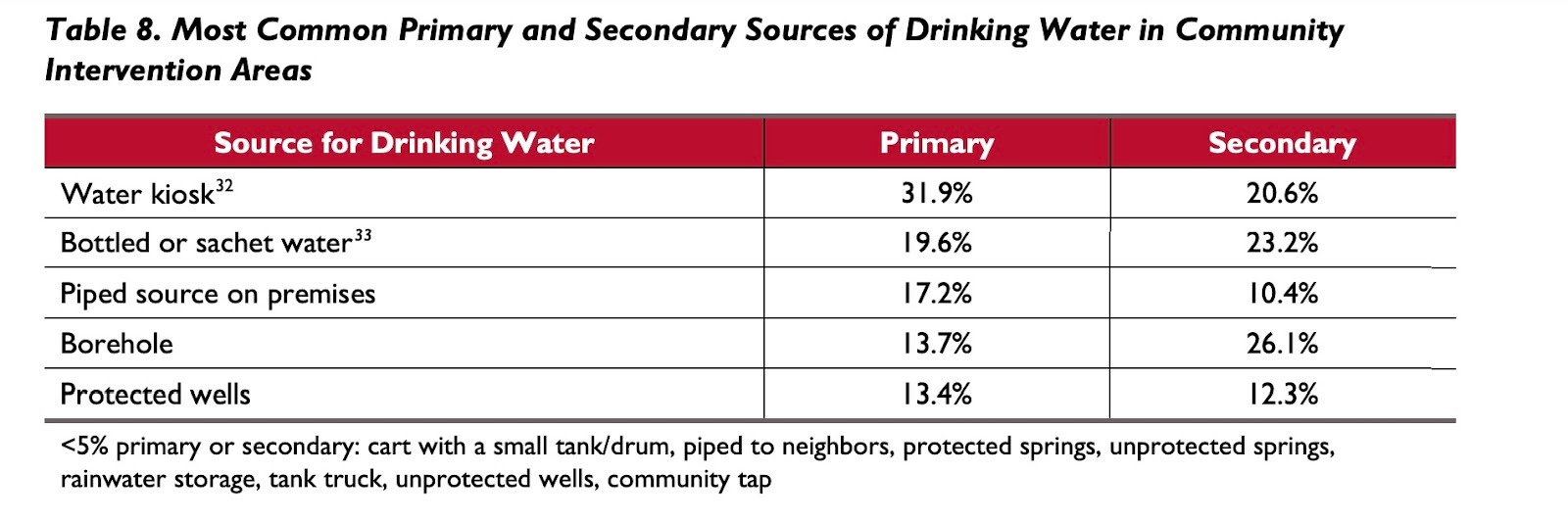
Table 1: Most Common Primary and Secondary Sources of Drinking Water in Community Intervention Areas
(USAID Urban WASH Project 2023, 20)
Table 1 provides more insight into household behaviour by displaying the most common primary drinking water sources in CI areas and what sources of water they fall back on when their primary is no longer available. The data shows that water kiosks are the most common primary source with 31.9%, followed by bottled or sachet water (19.6%), and then piped-on-premise sources (17.2%). The presence of alternative sources highlight that although IUWASH has made progress expanding piped-water coverage, households still rely on other methods. These alternative sources are not as safe and reliable. Boreholes, which make up 26.1% of secondary sources of water, are unsafe in Jakarta due to saltwater intrusion and pollution. Bottled water increases to 23.2% of secondary sources and can be a financial burden to households. If households lose their primary source of drinking water, they will have to fall back on unsafe or unreliable options such as boreholes or spend more money on bottled water. Jakarta’s water system needs to have sustained investment to ensure that safe drinking water is a reliable option.
With households potentially needing to increasingly rely on secondary solutions, attention then turns to how at home decontamination efforts work.
Figure 2: Quality from Point of Collection to Point of Consumption Among CI Households Whose Main Source is Not Bottled Water
(USAID Urban WASH Project 2023, 26)
Figure 2 compares quality of water at the point of collection to the quality of water at the point of consumption. There is a significant improvement in water quality with contamination levels falling from 55.5% to 38.5%. According to survey data, a likely explanation for this improvement is household water treatment (USAID Urban WASH Project 2023, 26). However, the data also shows potential dangers of household solutions. Water quality sometimes worsens between source and consumption due to unsafe storage practises. Only 39% of households had a WHO-compliant storage container, and households without these containers had higher contamination rates (41.0%) compared to those with compliant storage (36.9%). Additionally, when contamination occurred at the point of consumption, it was usually quite severe. Nearly two-thirds of contaminated samples exceeded 100 MPN per 100 ml, an unsafe level according to the WHO even for washing (USAID Urban WASH Project 2023, 26). While household treatments can partially get rid of contamination, it cannot replace IUWASH’s improvements in piped-water quality and distribution.
Not only is water contamination important to address because it protects the health of Indonesians, it is a very pressing problem because of climate change. Because climate change will only get worse, there is a need for urgent, climate-resilient solutions like the ones proposed by USAID.
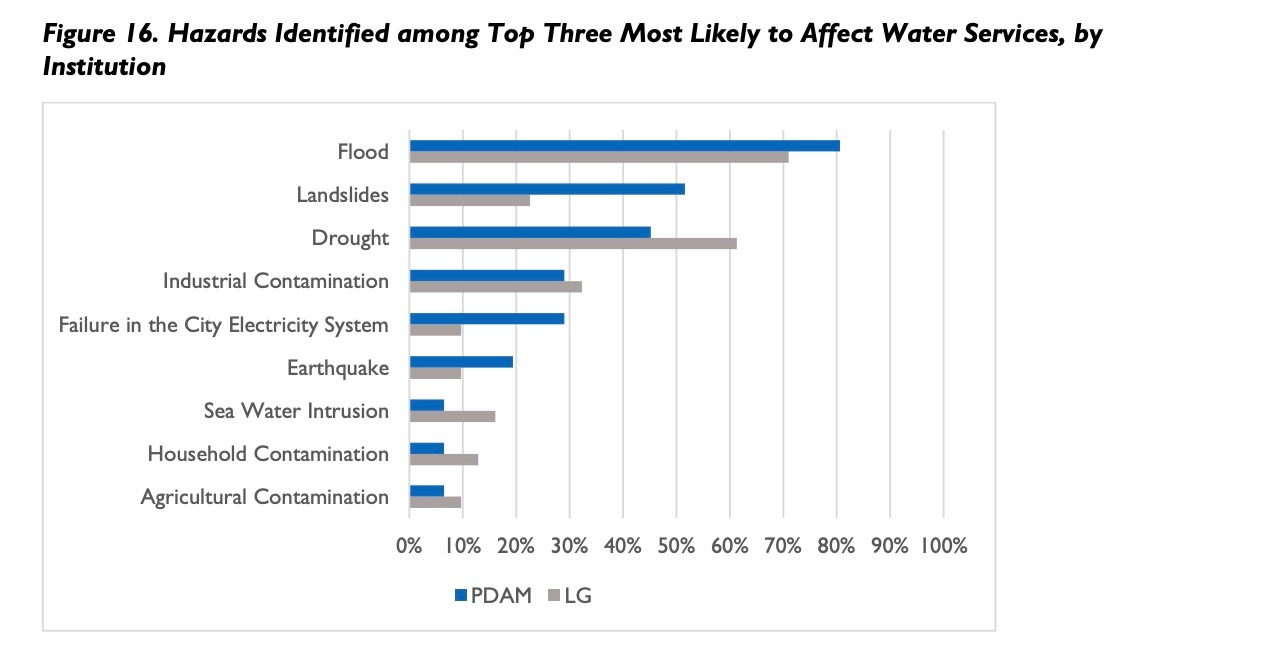
Figure 3: Hazards Identified among Top Three Most Likely to Affect Water Services, by Institution
(USAID Urban WASH Project 2023, 32)
Figure 3 looks at the hazards that households believe are most likely to affect water services. Floods, droughts, and landslides are seen as the most pressing threats. These factors are directly related to climate change. Excessive groundwater extraction causes land subsidence and makes flooding more severe and at the same time, climate change increases the frequency of droughts (Lazaro and Lancaster 2025). These risks demonstrate why USAID’s focus on climate-resilient initiatives was so important. The end of USAID programmes removed one of the few institutions addressing the climate threats on people.
This data demonstrate that USAID’s IUWASH programmes were producing significant improvements in water access and water safety. The contrast between CI areas and Jakarta’s overall access rate shows that the programmes were significantly effective. Reliance on unsafe fallback sources, post-collection contamination for households, and escalating climate risks all demonstrate the need for sustained support, and that that support needs to be given from an actor with the resources that households do not have. Without replacing the financial and technical resources provided by USAID, Jakarta is likely to see a reversal of progress that has been made over the past decade.
- Water Expansion Logistics
In USAID’s IUWASH initiatives, the piped-water expansion was done through a partner called the Development Alternatives Inc. (DAI). USAID provided funding and oversight, while DAI managed all of the logistics, including the coordination with local governments, public water utilities (PDAMs), contractors, and the implementation across 54 cities (Rathgeber 2015, 1). This implementation structure addresses a core issue in PDAMs. PDAMs’ limited water coverage has been due to financial and operational constraints that have limited their ability to invest and borrow for expansion, not a lack of demand or technical feasibility (World Bank 2023, 4). IUWASH had temporarily aided in this issue with external coordination and funding (Rathgeber 2015, 4).
The DAI had two main project components that made them so successful. The first is the master meter system, which expanded piped-water in low-income households and improved the sanitation system. Master meters would be installed at the entrance of neighbourhoods and connected to PDAM networks, with water then piped internally to individual households. These would be organised by community organisations, who would work on the internal piping, monitored usage, and collected payments (Rathgeber 2015, 2). According to the audit, the master meter approach reduced household water costs by 70% in some districts, while increasing water consumption by almost 400 (Rathgeber 2015, 5).
The DAI were also responsible for the operational capacity of utilities. This includes training in billing systems, staffing, governance, long-term financial planning, and performance monitoring. As of 2014, 76% of targeted underperforming utilities showed measurable improvements in technical and financial performance (Rathgeber 2015, 2), however, the audit also highlights logistical failures that a future system can work to improve on. Poor coordination with donors led to duplicated efforts as well as delays in sewer system construction. Weak monitoring contributed to unstable infrastructure and unclear maintenance responsibilities (Rathgeber 2015, 2). A domestic initiative would have to be run organisationally to avoid running into these problems.
- Policy Proposal
This policy proposal asks the Government of Indonesia to develop and fund a national, centrally run, domestic programme to replace USAID’s IUWASH initiatives. This programme would replace the coordination and implementation role of the DAI, and be in partnership with PDAMs, in order to expand access to safe drinking water in Jakarta and prevent a fallback in progress. The collapse of USAID’s WASH funding in 2025 suddenly took away the technical support and investment that had been improving water security in the most populated city in the country. Importantly, it also showed that reliance on outside organisations may not be sustainable due to confounding factors. As the central authority responsible for the health and wellbeing of the people of Indonesia, the Indonesian government is the only actor with the institutional capability and obligation to coordinate a large-scale national response.
Given the evidence from the data, the need to have such an intervention is clear. As shown in Figure 1, USAID supported Community Intervention (CI) areas have shown an 85% rate of piped-water access, which is higher than Jakarta’s citywide average of 15% (Permanasari and Teoman 2024). These improvements were the result of targeted investments from USAID, and the national government can replicate these improvements. If the government does not intervene, Table 1 demonstrates that households fall back on dependance on unsafe boreholes and Figure 2 shows that household methods to clean contaminated water are not 100% effective, and at times may even exacerbate the contamination problem. The water access problem will also continue to get worse. Figure 3 identifies that with worsening climate change, climate risk assessments are ever more important to implement.
Because of the scale and urgency of the problem and the success of IUWASH interventions, this proposal recommends that the Government of Indonesia build on the success of USAID interventions by coordinating piped-water expansion, hygiene programmes, and climate-resilient infrastructure on the national level. This solution would be split up into three components.
The first component of this domestic movement would focus on maintaining and expanding piped-water infrastructure. Although IUWASH has made a lot of progress, there are still areas for the programme to expand to. Table 1 also shows that piped-on-premises water remains a primary source for only 17.2% of households in intervention areas, and far less elsewhere in the city. Government-funded expansion of piped services through coordination with PDAMS would offer households a safe, affordable solution to attaining water and an alternative to boreholes.
The second component would address hygiene. Figure 2 demonstrates that water quality declines between the point of collection and the point of consumption. Infrastructure investments will have limited health benefits without improvements in how households store safe water. A domestic initiative should include standards for safe containers to ensure that water stays uncontaminated.
The third component would address how climate change threats water in the city. Households view flooding, drought, and landslides as the most severe hazards affecting their water services. The Indonesian government should integrate climate-resilient planning into all water initiative decisions, such as flood-resistant infrastructure and measures against droughts and landslides.
The Government of Indonesia has the responsibility and the resources to ensure the progress achieved under IUWASH is not lost. Investing $300 million, the estimated amount invested under USAID’s Global Water Strategy to finance piped-water expansion, hygiene, and climate-resilient infrastructure, would allow the government to take over the responsibility of USAID on a national level and protect safe water progress. Without action, Jakarta risks backsliding into an even worse water crisis with higher costs for low-income families, more groundwater extraction, and even worse health risks. A domestic solution would properly prioritise preserving the progress already made and work to expand it to more communities.
- Conclusion
Jakarta’s clean water crisis is the product of decades of underinvestment in PDAMs and policy decisions that have not prioritised access to safe drinking water. The abrupt end to USAID’s IUWASH programmes in 2025 highlights the fragility of a system so dependant on external financing and organisation. Without a domestic successor like the Indonesian government, Jakarta will risk reversing the progress made to piped-water access, water quality, and climate-resilience. This will primarily affect low-income households who are not able to combat cost and health risks.
Opponents of expanded government intervention may and have argued that public water utilities are inefficient and privatisation is the way to go. Official planning documents from the 2017 Public–Private Partnerships Infrastructure Projects Plan, looks at private sector participation as a “silver-bullet” solution to water infrastructure challenges (Zamzami 2018). However in reality, Jakarta’s experience with water privatisation proves that this approach has limitations. The first wave of water privatisation in Jakarta began in 1997 and was unsuccessful, leaving almost half of the population without reliable piped-water. As a result, there was an escalation in tariffs and huge financial losses (Zamzami 2018).
In 2015, residents won their battle to end privatisation contracts in court, and in 2017 the Supreme Court ordered the end of water privatisation and the restoration of public management saying that access to water is a human right (Zamzami 2018). This decision shows the public’s resilience against privatisation.
The slow progress of PDAMs should not be seen as evidence that public solutions are ineffective. Rather, PDAMs have been constrained by financial restraints, which have restricted their ability to expand their water pipeline networks (World Bank 2023, 4). The success in progress in USAID’s IUWASH initiatives proves that when these financial constraints are addressed, a public solution is able to deliver the improvements in water access and safety.
Having the Indonesian government as successor to IUWASH will have the public solution that people desire as well as the financial and organisational strength to assist in growing PDAMs. They also have the responsibility to assist with the clean water efforts for the people of Jakarta. By investing in piped-water expansion, household water safety, and climate-resilient infrastructure, the government can ensure that the progress achieved under IUWASH is not lost. Without the government taking action, Jakarta will risk more inequality, health crisis, as well as environmental degradation. Now, Indonesia has the opportunity to capitalise on the success of IUWASH programmes, expand and improve them, and serve their population for a better tomorrow.
- References
bne IntelliNews. 2025. “USAID Ends Operations in Indonesia, Raising Concerns over Aid Programmes.” bne IntelliNews. https://www.intellinews.com/usaid-ends-operations-in-indonesia-raising-concerns-over-aid-programmes-371653/.
Lazaro, Sam, and Simeon Lancaster. 2025. “How the Loss of USAID Funding Affects Indonesia’s Ability to Fight Climate Change.” PBS NewsHour, November 9. https://www.pbs.org/newshour/show/how-the-loss-of-usaid-funding-affects-indonesias-ability-to-fight-climate-change.
Permanasari, Eka, and Denis Teoman. 2024. “Jakarta Is a Thirsty Metropolis without Drinkable Water.” Eco-Business, 360info, October 17. https://www.eco-business.com/opinion/jakarta-is-a-thirsty-metropolis-without-drinkable-water/.
Rathgeber, Matthew. 2015. Audit of USAID/Indonesia’s Urban Water, Sanitation and Hygiene Project. Manila: U.S. Agency for International Development.
U.S. Embassy & Consulates in Indonesia. 2023. “USAID Releases Indonesia Global Water Strategy High-Priority Country Plan.” July 21. https://id.usembassy.gov/usaid-releases-indonesia-global-water-strategy-high-priority-country-plan/.
USAID Urban WASH Project. 2023. Impact Evaluation of the USAID IUWASH Tangguh Activity: Baseline Evaluation Report. Washington, DC: USAID.
World Bank. 2023. Compendium for Public Private Partnership in Water Supply Sector Development in Indonesia. Washington, DC: World Bank.
Zamzami, Irfan. 2018. “A New Wave of Water Privatisation in Indonesia.” CADTM. https://www.cadtm.org/A-New-Wave-of-Water-Privatisation.
